
This Month in the Garden, November, with Kate Hill
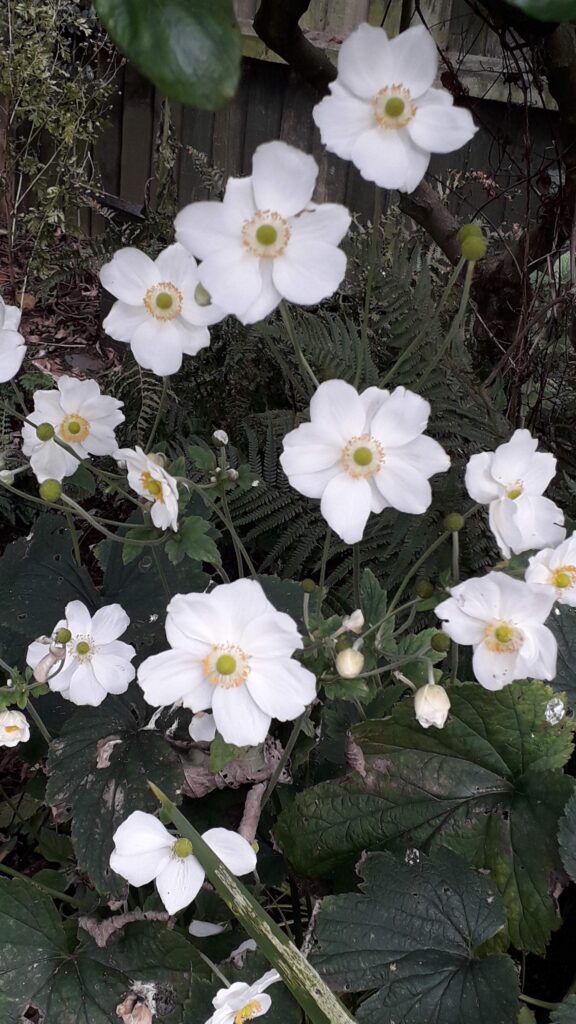
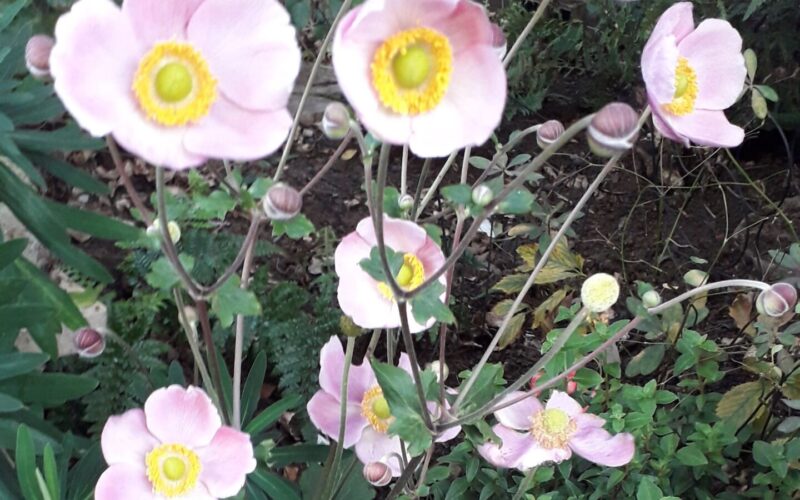
With autumn now well under way and summer’s blooms fading fast it’s good to know there are some stalwarts that can be relied upon to bring colour to the borders even at this late stage in the year. There are many varieties of Japanese anemones available, and I recently planted one called ‘Pink Cloud’ (see top of page) although my all-time favourite variety is the white ‘Honorine Jobert’ – the flowers really stand out, especially on a dull day and it flowers for months on end. Some people find Japanese anemones to be invasive, but I have never had a problem with them. If anything, they can sometimes take a while to get established but when they do I think they’re one of the best value plants to have in the garden.
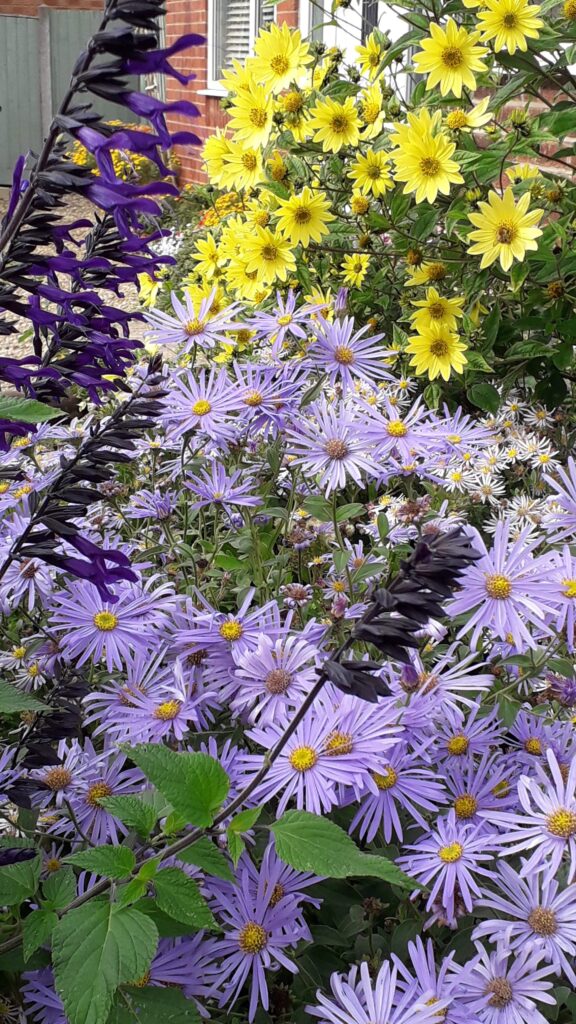
Another perennial I couldn’t do without is Aster x frikartii ‘Monch’. Like the Japanese anemones it starts flowering in July and goes on until November – what more could you ask of a plant? Its lavender blue daisy flowers always make me smile and bees and other insects enjoy the endless supply of nectar. Whilst some michaelmas daisies are martyrs to mildew ‘Monch’ is not one of them. The photo here shows it rubbing shoulders with Helianthus ‘Lemon Queen’ and purple salvia ‘Amistad’.
Speaking of salvias, autumn is really their time to shine. Newby Hall outside Ripon has an autumn garden dedicated to salvias of every colour imaginable – it’s a magical place.
Whilst the more delicate varieties will not survive a relatively hard British winter cuttings from the main plant will root very easily and can be overwintered in a greenhouse or frost-free environment, so it’s always best to take a few cuttings as ‘insurance’.
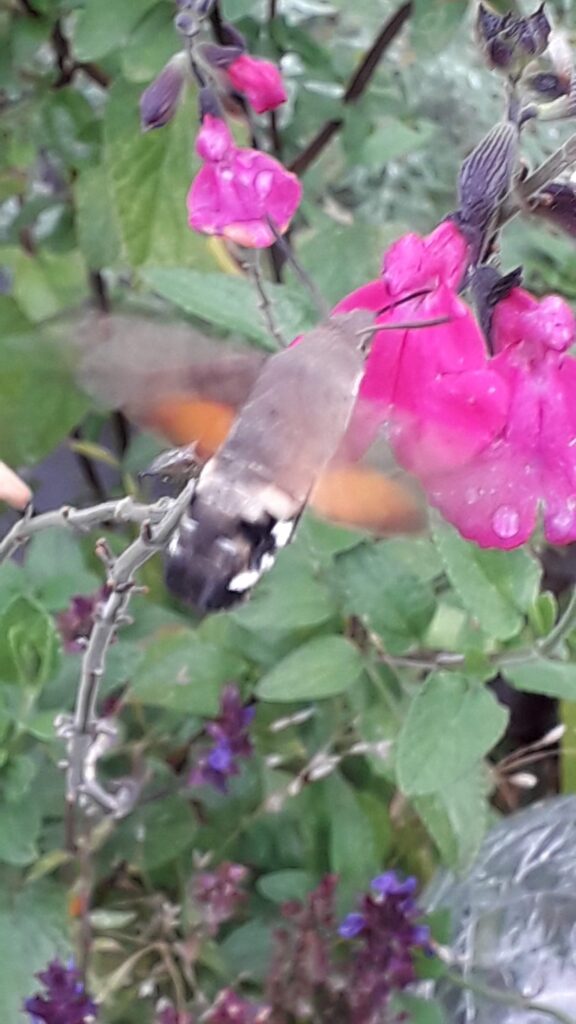
Sticking with salvias I’ve been captivated over the summer months by this very aptly named hummingbird hawk moth which has been a regular visitor to the garden, its favourite plant being the shocking pink salvia ‘Cerro Potosi’.
I apologise for the slightly blurred image but trying to take a photo with my phone whilst it was darting around stretched my limited photography skills somewhat but they’re such fascinating creatures I wanted to share it with you.
They are summer visitors and with our summers getting warmer they are becoming more common here. They are a day flying species and as well as salvias they also feed on plants such as honeysuckle and valerian where their long proboscis can reach the nectar inside the tubular flowers.
Sedums too are invaluable not only to us for their autumn colour but for the food they provide for bees when it is getting harder to find. When they have finished flowering their seedheads give some structure to the border over winter. Sedums have recently been renamed ‘Hylotelephium’ but I can’t imagine anyone except a botanist calling them anything but a sedum – so much easier to pronounce!
Rudbeckias, dahlias and the delicate butterfly-like blooms of Gaura will also continue until the weather takes a turn for the worse. I love to dot pink and white Gauras around the garden – the blooms appear to float in the breeze, although it’s touch and go whether they come back the following year as they won’t tolerate having wet feet. However, those planted in pots stand a better chance of surviving. Even if they can be a bit temperamental, I wouldn’t be without them – a new plant costs about the same as a very small bunch of shop-bought flowers but will carry on flowering for much, much longer.