
Tales from the Plot, April
It’s now time to set the sweetcorn seed under cover, if you haven’t already done so. Try setting them in cell trays wrapped in clingfilm: mine are on a bedroom windowsill. As soon as I see them pushing at the clingfilm I just snip the clingfilm with a pair of scissors and allow them to grow through, it’s never failed for me.
I’ve heard in the past gardeners talking about the Three Sisters system (see next paragraph) – well this year I’m going to give it a go, it seems to make sense so we shall see. I always grow a variety of sweetcorn called Incredible for no other reason than it’s the first variety of sweetcorn I had success with and I can’t see any point in trying a different variety. If you’ve never grown sweetcorn I promise you you’re missing out – to pick it, take it home, get it in the freezer as fast as possible so that it retains all the natural sugars…. sweetcorn loses its sugars from the moment it is picked so the sooner you can get it in the freezer or in the pan to cook then eat the better.
The tradition of growing sweetcorn, beans and squashes together is laid down in the stories of the Iroquois people (Native North Americans) who believed that corn, beans and squash were three inseparable sisters and would only grow and thrive together.
Bringing things right up to date, it is easy to see that the tradition describes a sustainable growing method providing long-term soil fertility and maximising growing space. The sweetcorn provides a natural support for the beans whilst the beans help to stabilise the corn plants, making them less vulnerable to blowing over in the wind. The shallow-rooted squash plants become a living mulch, smothering emerging weeds and cutting down on water evaporation from the soil, thus improving the crops’ overall chances of survival in dry years. The beans fix nitrogen on their roots, improving the fertility of the soil for the following year. Couple that with the huge amount of vegetation produced by the combination that can be dug in or composted and the sustainability of the method soon proves itself.
Success in growing using the Three Sisters system does need some careful attention to timing and seed spacing; if you simply plant all three in the same hole at the same time you will end up with a tangle of beans and squashes fighting for supremacy, overwhelming the sweetcorn completely! You may use any of our varieties of Sweetcorn and either Climbing French Beans, Runner Beans or Borlotti Beans.
There is a lot of work to be done on the allotments at this time. If you grow your potatoes in the traditional way, now is the time to dig the trenches. I grow mine in 30 L containers so no need for digging, patience is a virtue though, I won’t plant mine until May when all chances of frost should be gone. I’ve learnt from the past, if your potatoes get frosted it usually halves your crop.
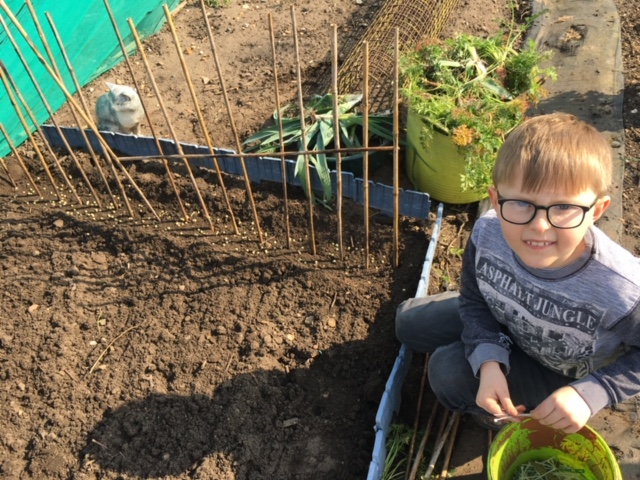
Carrots, beetroot and other root crops can be grown from seed direct in the ground towards the end of this month with the hope they don’t poke their heads above until the frosts have gone. Peas can safely go in now, my grandson is growing a few of his own: picking and eating peas direct from the plant is something all of us enjoy! More tender crops like Runner Beans and French Beans will not go out until next month.
I love this time of the year, if all goes well the work put in now will supply vegetables for my family for the rest of this year and into the next, fingers crossed.
Richard Thorpe 15 b Syston allotments