
Tales from the Plot
The days are now shortening, and it won’t be long before the cold damp days of autumn are the norm, however many crops are still producing well.
Every year I grow dwarf bush type French beans. Last year I grew a variety called Annabelle for no other reason than it’s my granddaughter’s name – they grew reasonably well and the crop was pretty average, all was acceptable. Once the frost came it was time to pull them out and add to the compost bin – when I did so I noticed there was rather a lot of beans that I’d missed still on the plants, so I removed them, let them dry out and saved the seed for this year. I included some Annabelle dwarf beans in my seed order this year purely because I didn’t know whether the seeds I’d saved would be viable. At the end of March I planted the new packet of seeds and waited about four weeks before putting a row of the seed I had saved leaving about two feet from the row that was now just poking its head through the surface, well amazingly there’s been quite a difference the seed that I had saved has produced more productive and stronger plants, I didn’t understand why? However I told a fellow plot holder of my experience and he suggested that the seed I had saved and already grown in this soil it was their home that’s why they grow better, whether there’s any truth in that I just don’t know. I think I’ll sit on the fence for now but this is giving me encouragement to try and save more seed, I’ll keep you informed on my experience.
If you keep picking the raspberries they can keep cropping, depending on variety, right up until the first frost. Cut courgettes and marrows regularly because they will be finished by the end of the month, as will outdoor tomatoes: I remove any green tomatoes and place them on a windowsill to ripen …. in the past I’ve been lucky enough to still have tomatoes on Christmas Day!
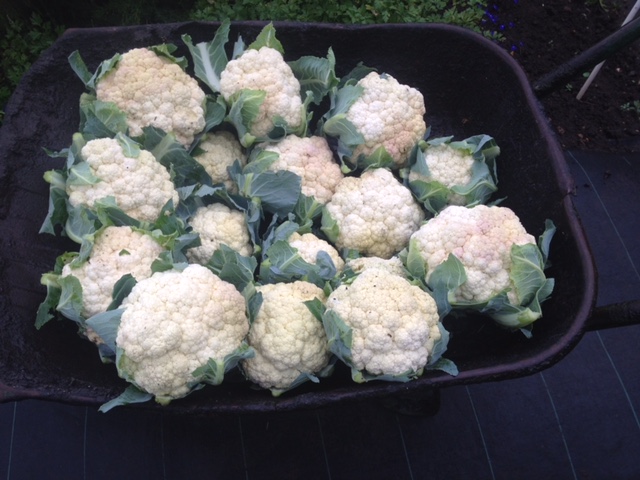
I have some spring cabbage plants which I’ll get in this month along with other winter greens. Spinach can also be planted and will crop right through the winter, now is also a time to plant overwintering cauliflower, I’ve had great successes by planting cauliflowers now – they stand up well over the winter and as soon as the warm weather comes they produce their heads, which highlights another one of my failings. I often have too many maturing altogether and once cauliflowers are ready to pick you have to pick them although my excitement along with beaming joy after producing such a crop is soon reduced when Jane says ‘what are we going to do with all of these?’ Hummm! – thankfully one of the great pleasures is that I do enjoy giving friends and neighbours something, which often feels like against all the odds, I’ve planted and managed to keep it alive ultimately producing something worth eating. Sometimes it’s quite a relief to harvest and take home the produce with a feeling that my job is done LOL!
The onions are now all harvested and drying, for me it’s been quite a good year; they’ve grown very well and have showed no signs of disease other than a little bit of onion white rot I normally manage to grow enough to last us till well into the new year.
At the end of this month it’s time to dig up and compost any plants that have finished their season, clear the soil of spent crops and leave it rough dug over for the winter, it is also a good time to sow winter grazing rye as a green manure, it can be dug back into the soil as part of spring preparations. This is a practice I’ve never taken part in, however many swear by it – I always think this is the time of year to try and secure some manure I normally just cover the ground with remains of my removed spent crops, it’s amazing how quickly it disappears – the worms take it in and it’s a nice feeling to put something back into the ground as a thank you for what it’s allowed you to harvest throughout the year.
Richard Thorpe plot 15b