Tales From The Plot June
The Emblem flower for June is the Rose. June’s character is Hot weather. There will be a Full Moon on the 30th, with Moon names – Rose (Medieval English) Hot, Strawberry, Planting/Hoeing, Lovers & Honey moon – linking season of marriage and Bee hives thriving).
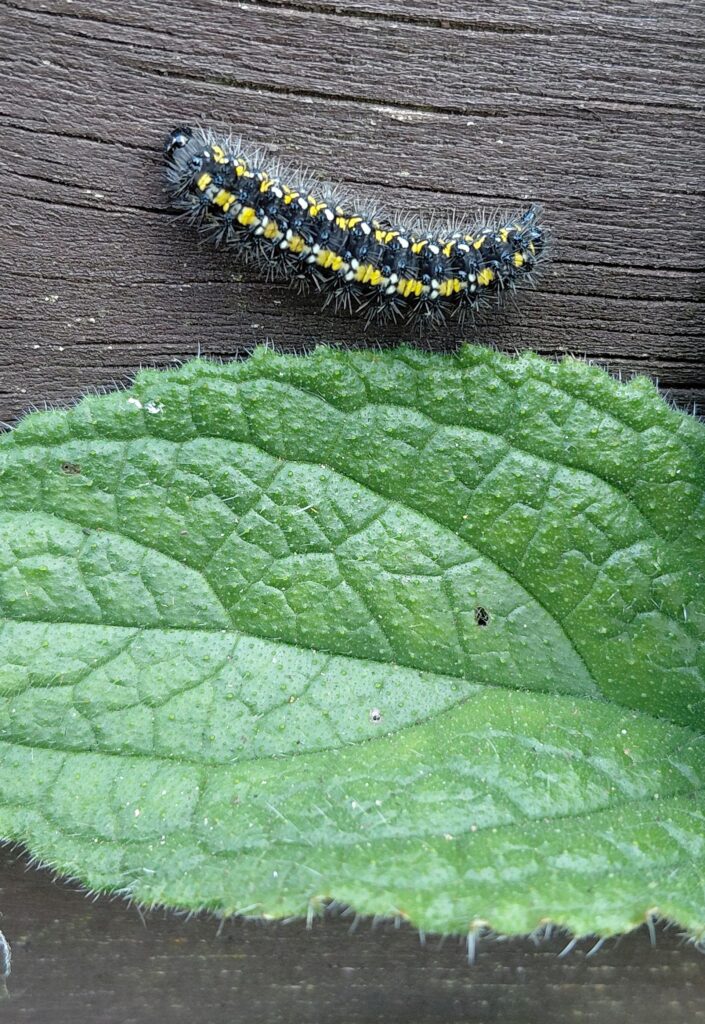
Last month I had a sad event on my plot. I inadvertently trod on a caterpillar sunning itself on a path. No ordinary caterpillar, but a quite rare newcomer for the East Midlands. A day flying Scarlet Tiger Moth. (Callimorpha dominula). A species that I particularly look out for when it flies in June.
Its caterpillars and other beneficial wildlife thrive on Green Alkanet and Comfrey. I even keep one nettle patch specifically for this exotic beauty .. who wouldn’t? I just hoped there were lots of other young surviving. I have helped to keep them happy with some habitat since first spotting them in 2024. These, as either caterpillar or moths, do not eat or lay eggs on vegetables, so cause no issue to gardeners. Luckily I did find this same species of caterpillar alive the next day.
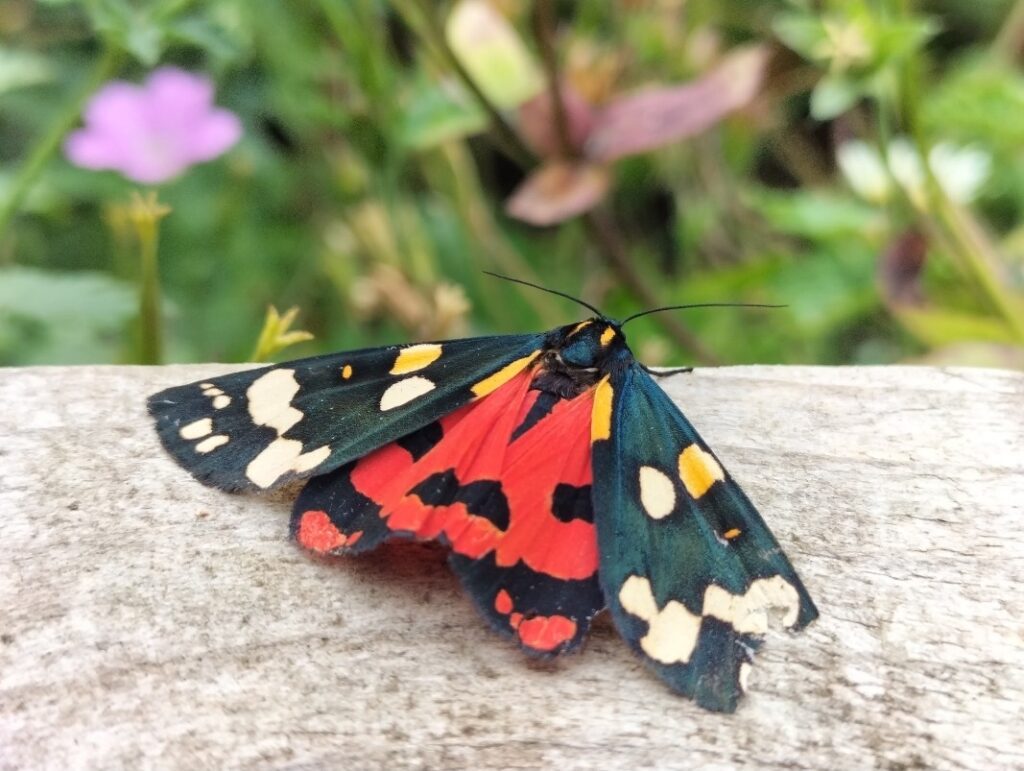
So, come late June, I am optimistic of being rewarded with sightings of the impressive adult (like this one below taken 27/6/24). For me, this makes it worthwhile to have a dedicated area of blue flowered Alkanet and other pollinator friendly wildflowers.
Much of my gardening enthusiasm began firstly with my mums passion and seeing her at her happiest in our garden that she helped create with her father in her youth, then, during Geoff Hamilton’s era on Gardeners World, particularly at Barnsdale garden in Rutland from the mid 1980’s to his far too early death in 1996, coinciding with my first owned garden. I liked his method of combining vegetable growing in among attractive plant combinations close together, rather than traditionally being kept separate. For me, he ‘sowed the seed’ for the idea to mix prettiness with function. Whether it’s for planned ‘companion planting’ for the mutual benefit of pollinators and plant success, or just creating appealing blends.
This informal, aesthetic approach can help attract good insect and soil activity for plant health, whilst also confusing some of the nuisance insects, by disguising strong smells otherwise emitted from larger collective single plant areas. (such as brassicas as one example). Having said that, Barnsdale still has an impressive, separate, traditional organic allotment garden to envy. I also love seeing vegetable rows on allotments. My own is a 60 X 14ft (18m X 4m) combination of styles.
My crops are growing reasonably well. Maincrop potatoes are coping with being only a second crop on a newly retrieved patch, reclaimed from 15yrs exclusively for red currants. The same area failed for sweetcorn in 2025. It has since been heavily nourished with manure, blood, fish & bone, chicken pellets and soil improver.
Richard, (this column’s usual writer) is now seeming at last to be on a more stable course, ever hopeful of leaving hospital, at time of writing.
Kate H. Syston Allotments