Scarce Butterflies on the Wing
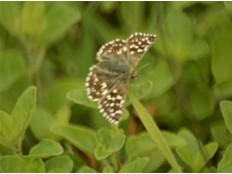
A rather strange-looking something, a moth maybe has just landed on the stony ground a few feet in front of me. Must be a moth. It can’t be much more than an inch in width. It fits well with the grey/brown stones, scrub and weeds lying across my path. It lies on the stones absorbing the mid-morning sun for about five minutes and then flits purposefully on to some leaves where it may be resting or feeding.
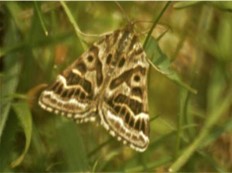
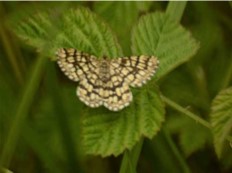
Could it be a moth, maybe a Mother Shipton or a Latticed Heath both of which are brown and have intricate designs? But no, further checking of its well-patterned speckling reveals it to be a Grizzled Skipper. Grizzled? Surely, that means to grumble or complain. Well, yes, but it also describes a greyish or off-brown colour as in the Grizzly Bear in North America. These butterflies emerge towards late April and can be seen in quarry and wasteland areas like Ketton Nature Reserve and also disused railway tracks near places like Bingham in South-East Nottinghamshire. But nowadays they are by no means common.
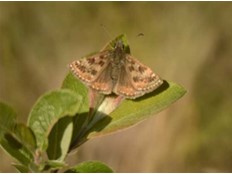
As I wander on further I find another brownish butterfly, just a little larger than the Grizzled. It’s more uniformly brown although a border of faint speckles can be made out on the hindwing. This butterfly favours similar sites and emerges maybe just a few days after its cousin, the Grizzled. This is a Dingy Skipper and they seem to like sunbathing for even longer than the Grizzled, maybe because they are larger and need more time to absorb the sun’s energy. Many walkers would bypass these butterflies, not noticing or just simply disregarding them while the skippers activate and then seek out their foodplants. The Grizzled often makes a beeline for flowering wild strawberry or bird’s foot trefoil while its cousin seems to be more of a generalist favouring a wider range of nectar providing flowers. The Dingy is on the wing for a similar length of time and usually by the middle of June both species have ended their lifespan, bred, laid their eggs and then faded away into death’s obscurity. Unfortunately for most of us, they are not usually the kind of butterflies that will be seen in a local garden unless it’s successfully been converted into a stony and ramshackle wasteland!
Efforts are being made in certain areas like South Notts to improve habitats for the Grizzled and Dingy Skippers mostly by means of the Midlands Butterfly Conservation Mosaic Project which covers an area between Lincolnshire and Shropshire which has provided funding for habitat improvement. Other butterflies like the declining Small Heath and Marbled Whites are also expected to benefit from this project’s work. I am now in my fifth year of co-ordinating a small team of butterfly surveyors and recorders which focus on the two skippers, also Small Heath, Small Copper, Holly Blue and Green Hairstreaks as six small butterfly species which have shown variable declines in recent years. Eight sites in Leicestershire and Rutland receive a varying degree of survey coverage and the data extracted adds to that obtained by other butterfly surveyors covering most of these sites.
Results are then passed to the county butterfly recorder to determine an overall picture of butterfly numbers at these sites and how their populations are faring.
Robin Perry