
Simply Grow by Charlotte Ryan
We all hoped March would arrive bringing sunshine and warmer days. And to be fair, it did… briefly. We had a couple of glorious days where the sun was shining, the birds were singing, and it almost felt like summer had arrived early. Naturally, many of us rushed outside with big gardening plans and the sudden urge to tidy every border.
Then the very next day it was back to jumpers and woolly hats, wondering if winter had quietly crept back while we were not looking. Just as we got used to that, the umbrellas appeared again. Typical March weather really — one minute you are thinking about sun cream, the next you are scraping frost off the greenhouse and questioning all your gardening enthusiasm. Still, it keeps us gardeners on our toes and reminds us that spring is definitely on the way.
Gardening Jobs for April
Buy Bedding Plants
If you have a greenhouse, lean-to, or another frost-free space, April is a good time to buy young bedding plants and start growing them on. Keep them in a sheltered environment until the weather warms up. Be careful not to over water at this stage, as small plants can easily rot if the soil stays too wet. As a general rule, bedding plants should not be planted outside until the risk of frost has passed.
Plant Summer Bulbs
April is an ideal time to plant summer flowering bulbs such as dahlias and gladioli. These colourful blooms will brighten up borders and containers later in the year. They are also excellent for cutting, so you can create your own fresh flower arrangements to enjoy indoors.
Plant Early Vegetables
If you’re like me and grow your own vegetables at home, now is the time to start planting out the hardy vegetables. Good choices include broad beans, beetroot, carrots, Swiss chard, summer cauliflower, lettuce, leeks, radish, turnips, spring peas and spinach. These crops cope well with cooler conditions and will provide tasty harvests in the months ahead. More tender vegetables should be started under glass in a greenhouse or conservatory. They can then be planted outside once the risk of frost has passed.
Feed Shrubs and Trees
Shrubs and trees will benefit from feeding in April. Sprinkle a general fertiliser around the base of plants to provide nutrients as growth begins. Acid-loving plants such as camellias, rhododendrons and magnolias should be given an ericaceous feed instead. Roses will also benefit from a balanced fertiliser at this time. If you normally spray your roses to prevent pests and diseases, April is a good month to start.
Sow Sweet Peas
March and April are the best months to sow or plant out sweet peas. These beautifully scented flowers are a favourite in many gardens. They prefer moist soil, so choose a spot that does not dry out too quickly. Adding organic matter and mulch will help retain moisture and
encourage strong growth. Remember to harden off young plants before moving them outdoors.
Lawn Care
April is also an important month for lawn care. Start by raking away fallen leaves and debris from winter. Aerating the lawn will improve drainage and encourage strong roots. Applying a lawn fertiliser will provide nutrients for healthy growth, and regular mowing can begin again using a higher cutting setting.
Easter Children’s Growing Activity
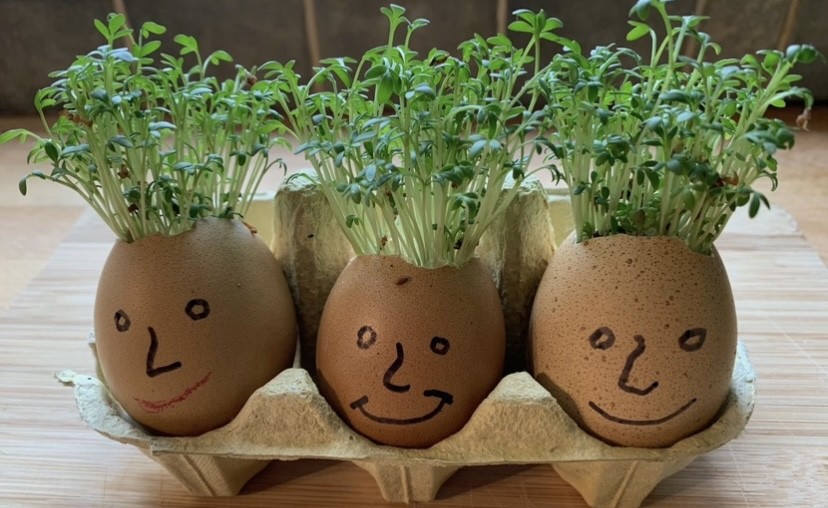
Cress Egg Heads
What you need: Eggs, Butter knife, Pens or paint, Cress seeds, Kitchen roll or tissue. Cotton wool balls or cotton pads. Egg cups or an egg carton.
A windowsill
A fun Easter activity for children is making Cress Egg Heads. Cress grows quickly and is perfect for teaching children how food grows from seeds.
- Boil some eggs and allow them to cool. Carefully remove the tops, empty the shells, and rinse them gently. Decorate the shells with faces using pens or paint.
- Place a damp piece of scrunched kitchen roll inside each shell, then add a damp cotton wool ball on top. Sit the eggshells in egg cups or an egg carton. Sprinkle about a teaspoon of cress seeds onto the cotton wool and lightly water.
- Place the eggs on a sunny windowsill and keep them slightly moist. Within a few days the cress will begin to grow. Once it reaches around 5 cm tall, cut it with scissors and use it to make delicious egg and cress sandwiches.